Section 481 Skills Development Requirement
Ireland’s reputation for excellence as a production hub stands out internationally. This is not only because of indigenous productions breaking out to a global platform but also the appeal Ireland offers to international projects; world-class studio facilities, distinctive natural locations, a workforce renowned for their talent and work ethic, and the competitive financial incentives offered under Section 481 of Ireland’s tax code.
As the national agency for the film, television drama, animation and documentary industry, Screen Ireland is committed to developing sustainable careers in the screen sector and our skills development strategy is central to nurturing the talent required for its future success. Since 2019, in order to qualify for Section 481 tax certification, productions must provide opportunities for skills development through structured work-based learning. This involves the development of a detailed Skills Development Plan in conjunction with Screen Ireland that addresses the key skills needs of a given production.
Our industry is building core skills throughout our workforce through Structured Work-Based Learning. Targeted skills development initiatives have built strong links between educational resources and productions engaging the Irish film industry. This has often been achieved through courses organised by Screen Ireland and taught by leading industry professionals. Yet there is no substitute for learning through practical experience on the job, for established workers upskilling and new entrants alike. As other industries develop competency frameworks for roles in their workforce, Screen Ireland now provides a comprehensive overview of the tasks and skills required of each worker on a production. Across each sector of the audio-visual industry, we can build on best international practice to make Ireland’s skills base uniquely attractive for productions.
A good Skills Development Plan should identify the skills needs of a production and detail the steps that will be taken to address them. This involves determining the number of individuals who will be participating, describing the skills activities they be engaging in, and how their skills development progress will be monitored and reported.
It is recommended that each production should either appoint an individual or nominate a suitable crew member to the role of Skills Development Officer who will engage with Screen Ireland throughout the production as well as at application stage and compliance stage. The roles and responsibility for this person include:
*Please note that the role of the Skills Development Officer is a skills related role and not a HR related role (unless the Skills Development Officer already assumes a HR role as part of their role on the production).
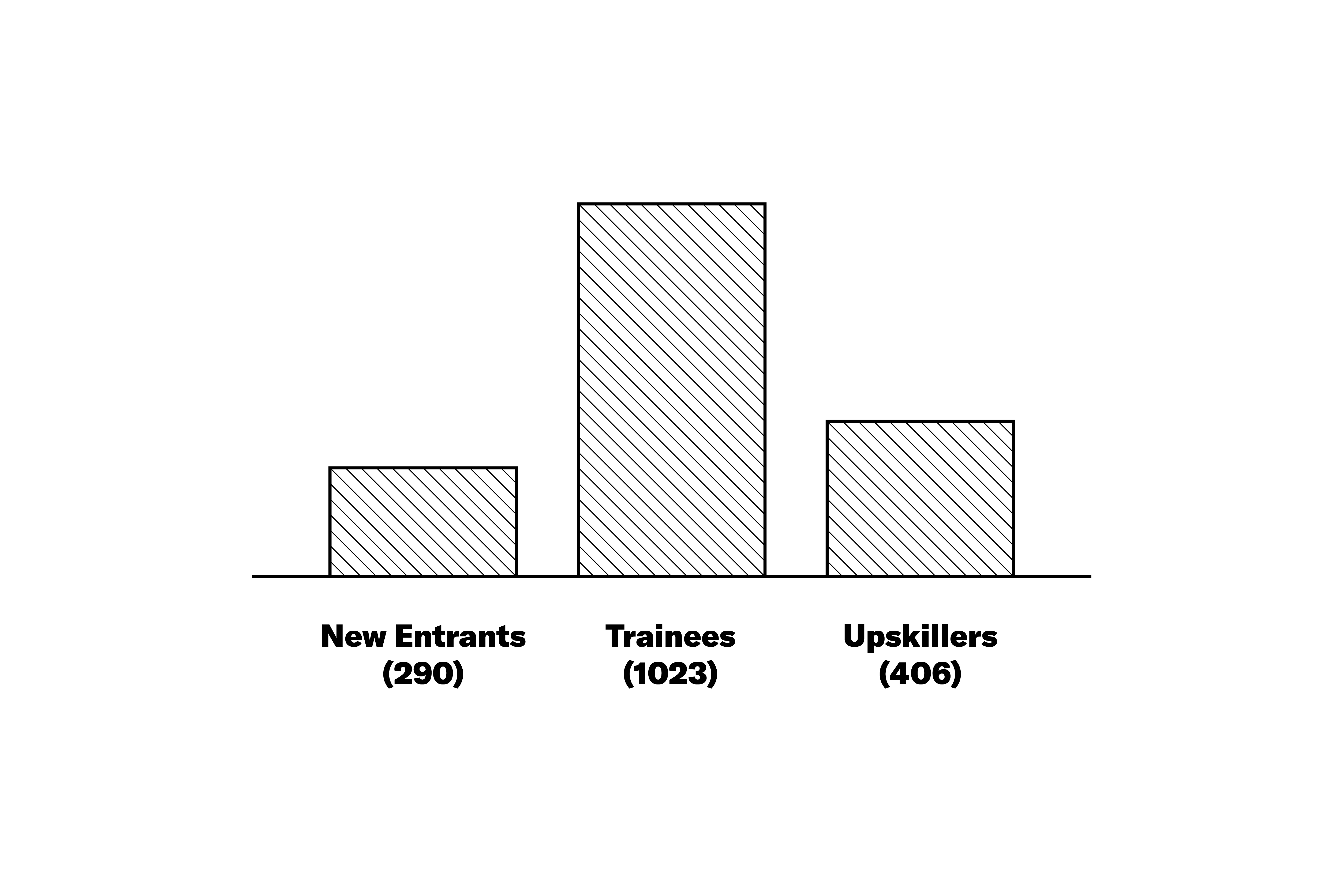
New Entrants - First time working in the industry. New entrants could have transferable skills from other industries and have a clear passion to work in the screen industry.
Trainees - Up to 5 years working in the industry.
Upskilling - Those on productions who are not new entrants or trainees, these skills participants could be stepping up to a new role e.g. Production Coordinator to Producer/Director.
Overarching aims of our skills development strategy are based around Screen Ireland’s corporate social responsibility. Two key areas skills development under Section 481 must address are environmental sustainability and Diversity, Equity & Inclusion. For a truly sustainable industry, productions must be ambitious when it comes to environmental sustainability, adopting eco-friendly practices that reduce a production’s environmental impact. This will achieve our sectoral target to be carbon neutral by 2030 while also making business practice in the industry more efficient. To find out more please refer to Screen Ireland's Sustainability Plan.
Screen Ireland is also determined to have an inclusive industry, where placements can champion the career development of workers from under-represented backgrounds in gender, ethnicity, and disability. With a more diverse industry, productions will have more innovative perspectives to draw on for creative solutions as well as a more positive impact on employment and social cohesion. A key part of this is to expand opportunities for on-screen talent and storytelling from minority communities, so that the modern diversity of Irish society is accurately reflected on-screen.
Emer MacAvin - emer.macavin@screenireland.ie
Skills Development Executive - Section 481 & Work-based Learning
Patrick Scahill - patrick.scahill@screenireland.ie
Skills Development Coordinator - Section 481 & Work-based Learning